Piggybacking to the Frontier
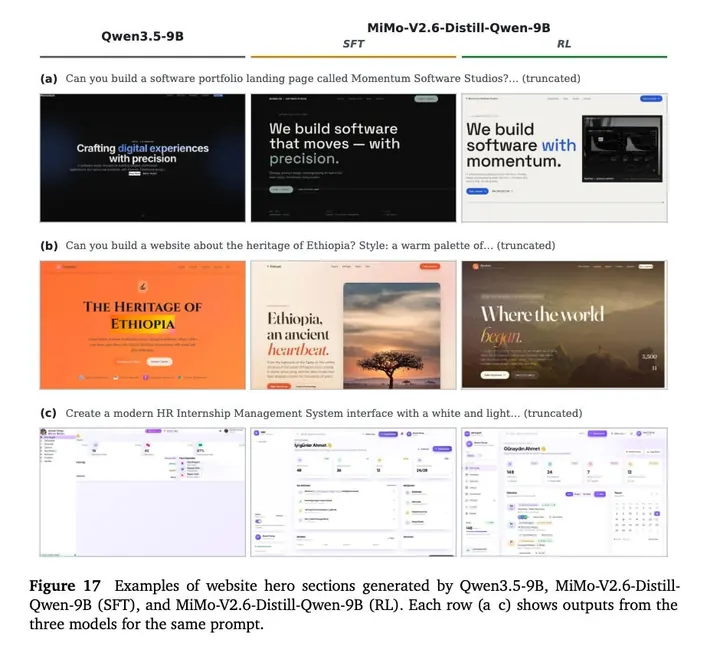
American data companies like Mercor, Surge AI, AfterQuery, and Turing are selling roughly half a billion dollars worth of data to Chinese AI labs. A chunk of that data comes in the form of reinforcement learning (RL) environments, which labs use to post-train their models to make them excel at specific domains like coding, cyber, finance, law, and bio. Post-training, and especially RL, is one of the most important indicators of the final performance of a model. Whenever a new model within a single generation drops, the advances from the previous release are entirely due to post-training. The difference between Opus 5 to Opus 5.5, or from GPT 5.5 to GPT 5.6, is not due to a new pre-training run. Since they have the same base model, the capability gains come from researchers teaching the model to get better at specific domains. The phenomenon of American companies arming Chinese labs with the data that enables this RL should set off alarms for policymakers and those invested in the U.S.-China AI race: American companies are helping Chinese labs develop better models, and we were able to find at least nine who do so. But the business relationships between data vendors and Chinese labs are more complicated than that single hawkish line, and today, we’re diving into what’s going on. We’ll cover: What it means to sell an RL environment and how it differs from distillation The current ecosystem of China-tied data vendors To what extent American companies are selling RL environments to China Whether this is a problem that needs fixing What RL Does and Doesn’t Look Like Example RL Flows RL environments are essentially simulated worlds in which a model can train to improve its performance at specific tasks or environments. As an example, a model developer may want their model to get better at creating PowerPoint slides with pleasant aesthetics and clear text. To achieve that capability, the model developer may go to a data vendor and ask them to make a clone of PowerPoint so that the model can train repeatedly and learn how to use tools to make a good slide deck. The product the vendor is selling may include the PowerPoint clone itself, as well as a grading rubric to determine whether or not each of the model’s outputs should be rewarded or disincentivized. For something as nebulous as a “good” PowerPoint, data vendors often contract human experts to create rubrics or sample grade slide decks. They might hire McKinsey consultants, professional designers, and other experts to create the perfect PowerPoint rubric, which the model developer will use in RL. At the beginning of the post-training run, a model might be churning out low-grade slide deck slop. This is typical of early “rollouts,” or instances of the model solving (or attempting to solve) the task. But by being in a PowerPoint-like environment and learning from grading rubric signals, the model gradually gets better at using the app until it produces a quality product. This is “RL” in a nutshell. It is often specific to one domain (like PowerPoint creation, navigation of live websites, or using spreadsheets for data analysis), so developers are purchasing countless environments to drive improvements across a variety of tasks and fields. When your model suddenly starts functioning in Slack or Google Docs, it is because the developer post-trained it to be better in those environments. For the PowerPoint example, the value the data vendor provided was in creating the app clone and in having a network of experts to create a good rubric and stress test the clone. But other environments require less active work and are more about having the right data. For coding environments, for example, data vendors spend huge amounts of money purchasing company GitHub repos; this data will include bugs in codebases and the fixes the company’s engineers employed to patch those bugs. With that data, a developer can give the model the codebases with the bugs present prior to the patch and test whether the model found the fix. What makes the RL environment valuable is its ability to actually improve the model’s capability. Not all environments are created equal, and a vendor’s environment becomes valuable when it has sufficient data diversity, good task choice, and proper difficulty calibration for a particular model. Chinese Labs can Piggyback Off American Labs to Save Compute American vendors helping a Chinese model get better at slide decks might seem innocuous, but the issue arises when Chinese labs are able to procure environments related to sensitive domains, and when these environments enable piggybacking off American labs. By selling environments for coding, for example, data vendors are also assisting Chinese models in exploit-finding and offensive cyberattack capabilities. Environments for biology-related tasks could upgrade models’ abilities in gene synthesis and bioweapon design. The line between an acceptable environment and a dangerous one can be hazy, and right now, almost everything is kosher. RL environments are also not perfect on the first try. Perhaps the initial PowerPoint clone had bugs, the grading rubric was rewarding incorrect behavior, or some dataset was low quality. With the vast amount of data vendors out there and the even larger amount of products they sell, model developers can waste time and money procuring RL slop. Thus, Chinese labs have been reported to purchase exactly the same products as American labs like Anthropic and OpenAI so as to acquire what they know to be good data. The exact compute savings vary significantly depending on the exact environment, but one study suggests that rollouts (RL runs) consume more than 70% of RL post-training time , so these savings are not insignificant. This is especially true for Chinese labs, as rollouts rely on inference. Inference operations are memory-constrained compared to most training operations which are compute-constrained, and Chinese chips, more than lack of compute, suffer from a lack of high-bandwidth memory (HBM). Therefore, saving on memory-constrained operations is a huge boon to their model development. American labs may pay up to four or five times more for an exclusive product to avoid this piggybacking phenomenon and keep their post-training recipes confidential, but even then tacit knowledge trickles down to Chinese labs. If a data vendor cannot make the exact same PowerPoint clone for a Chinese client, they can still avoid making the same mistakes when they create a similar environment for competitors; this again saves Chinese labs time and compute by streamlining rollouts and arriving at a good product quicker. Vendors even flaunt this dynamic, with Surge AI’s site marketing “RL environments built by the same experts behind our frontier-lab work.” Distillation + RL Piggybacking = Problem RL piggybacking allows Chinese labs to improve models at the final stage of post-training, making it arguably more important than distillation. Supervised fine-tuning (SFT) is the process before RL where distillation occurs. Instead of creating an entire PowerPoint clone, distillation allows a developer to use a stronger model as a teacher to make better slide decks. A Chinese lab just asks Astra or Fable to make a bunch of good PowerPoint decks, and the Chinese model can learn from those examples. This is significantly cheaper in terms of dollar cost and compute compared to RL. In a way, however, this is also piggybacking off the RL environments the American lab used to get their models to create such pleasing slide decks. It is unclear which of SFT or RL is “more” important, given conflicting evidence from recent model releases. Mistral Large 4 , for example, demonstrated its major gains to be from RL, not SFT, on a variety of benchmarks. For Xiaomi’s MiMo-V2.6, however, SFT seemed to achieve more gains. One explanation may be that Chinese labs are simply doing a lot more distillation, which is why they get more out of SFT than non-Chinese l