Import AI 477: In which I tell the IMF the Singularity has begun
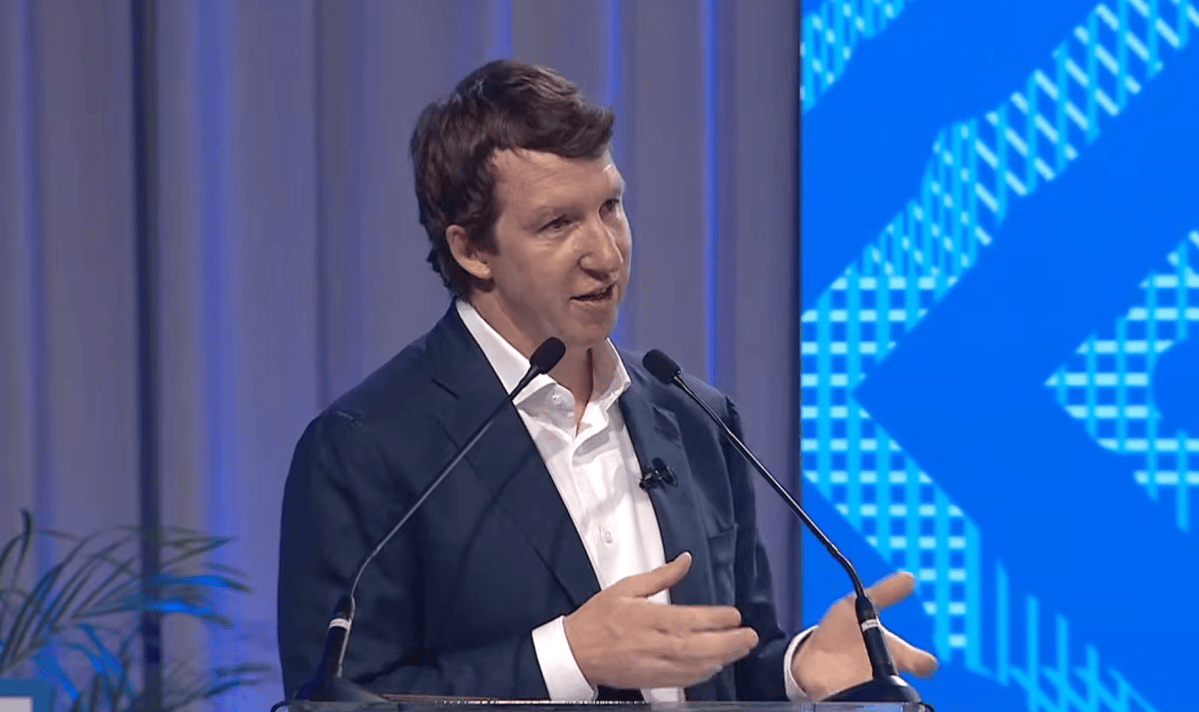
Welcome to Import AI, a newsletter about AI research. Import AI runs on arXiv, cappuccinos, and feedback from readers. If you’d like to support this, please subscribe. Subscribe now Here’s a speech I gave on Saturday the 17th of October at the IMF meeting in Bangkok. This speech is inspired by the megatrend readers have seen me cover this year of AI beginning to operate at the frontier of human science, sometimes autonomously. While we all may quibble over the details, I think it’s evident we’re in the early stages of the singularity, and I wanted to use my privileged position of giving the Per Jacobsson lecture to try and tell the assembled audience of economists, bankers, and policymakers, that they should expect significant, rapid change in the future. In this speech, I focused primarily on how humanity can share in the benefits of AI if we exercise proper foresight and restraint, and I’m going to be expanding on the stakes of the singularity and the risks that we’ll all face in coming issues. As I said a few times in the speech – some of which was ad libbed and not captured here – I take my own responsibility here extremely seriously. I find myself both a narrator of what is happening in AI, a principle agent behind what is happening in AI, and a translator that goes between many communities. In all of this, I am seeking to be truthful and to be clear about my own culpability. This is a forever work-in-progress. Thank you all for reading. Speeches like this draw heavily from the newsletter, and the newsletter is my attempt to provide week-by-week information to all of you. I appreciate your readership. *** Inside the Event Horizon: Why Everyone Should Take AI Progress Seriously Hello, thank you for having me. It is a great privilege to be here. To start, I should list my relevant credentials: I am a human being. There is one of me. It has taken me almost 40 years to build the experience to give this speech. I will come back to those credentials later. My whole career has been defined by finding information that seemed important to the future of the world, then telling the world about that information.Two decades ago, I started my career as a journalist, focusing on data centers. Through that work, I became so obsessed with AI that in 2016 I left journalism to work at OpenAI, then co-founded Anthropic a few years later. Ever since, I’ve been trying to convince the world that one day, AI systems might become so powerful that they could alter national security, change the economic trajectory of the planet, and perhaps eventually gain the ability to build themselves. Well, the moment has arrived. AI is now changing national security, it is altering the economic trajectory of the world – as we’ve heard in so many sessions here – and is contributing to its own development. Of course, many of you know this, and you are having to track AI as one of a multitude of destabilizing forces that is shaping your world and your work. What I am here to explain today is that AI is on a course to bring about even more change than what we are expecting and we should prepare accordingly. And I’m going to explain why. For many years, researchers and science fiction authors have forecast a future in which AI systems drastically increase the pace of overall scientific and technical progress, making things move so quickly that it is hard for humans to keep up. They call this the singularity. I believe that this year we have gained convincing evidence that it has now begun. The writer Vernor Vinge forecast this in 1993. “When greater-than-human intelligence drives progress, that progress will be much more rapid. In fact, there seems no reason why progress itself would not involve the creation of still more intelligent entities — on a still-shorter time scale,” he wrote, describing the singularity as “a point where our models must be discarded and a new reality rules.” The singularity is here . The implications reach across every aspect of life. But the most important implication is a simple one: we should expect that in the coming years, the whole pace of progress of not just AI, but science as a whole, will speed up. This will feel confusing and disorienting, and it will bring with it great wealth and potentially great peril. Today, I’m going to concentrate on the first point: the potential benefits of rapid AI progress, and what we need to do to share in these benefits together. So many of the ways that humanity will benefit from AI come from science. I believe that AI-driven scientific invention will change the course of the global economy, alter the ways countries plan and build their own infrastructure, make us all healthier and able to spend more time with our loved ones, and –– at the same time –– cause us all to ask deep philosophical questions about choices we should make about its continued development. I’ll develop my claim: For the last half century, most countries have dealt with falling research productivity while researcher headcount grows rapidly – ideas and inventions appear to be getting harder to find. But something important has changed: we’ve now built AI systems which have been able to augment, extend, and automate aspects of human labor. This has most obviously happened in software development, where AI systems are now more capable and efficient than the vast majority of the world’s software engineers. As a consequence, the field of software development is changing – A single person is now able to write software for anything they can imagine, creating things that previously would have taken entire teams of humans. We’ve seen concrete evidence of this inside Anthropic, where our researchers now produce almost 10 times the amount of code than they did for the first four years of the company’s life. But new AI capabilities bring new challenges – the coding improvements have meant AI systems have got much better at cybersecurity and cyberattacks –– leading the world to race to deploy these powerful capabilities to create better cyberdefenses, while bad actors race to use these systems to carry out hacks. The important thing to notice here is that these things are bound up, inseparably – the advance of AI systems in a general area like coding has also created both positive and negative impacts in domains of international relevance, like cybersecurity. This is a taste of things to come. Of progress yielding new capabilities, and new challenges. These capabilities will not stop at coding; the same thing will happen to science and robotics. It has already begun to happen. And it means some important properties of the global economy may change – like the rate of innovation, or the frequency with which we invent entirely new general purpose technologies that create new industries around themselves, like the internet, phones, and artificial intelligence. So, what causes me to believe this? In 2026, we have got the first signs that AI systems may be capable of doing science at the frontier, and we have some evocative examples of what the future could look like. For instance: In mathematics, AI systems have been used to propose solutions to longstanding mathematical problems, like the Navier Stokes Millenium Prize, the Jacobian Conjecture, and several open Erdos problems. In many cases, AI systems were responsible for core insights that made the solution possible. In biology, researchers have used AI to design viruses from scratch, to identify new drug candidates for testing, and there are already drugs in trials today which have been in large part designed by AI. In robotics, AI systems are now increasingly able to autonomously operate laboratory equipment remotely, making it possible for us to further automate experimentation in domains from biology to materials science, making progress faster in areas like batteries and fuel-cell development. Taken individually, each of these examples is exciting. But the profound fact is that they all relate to the same und