Generative AI Gives Spacecraft the Autonomy Engineers Once Feared
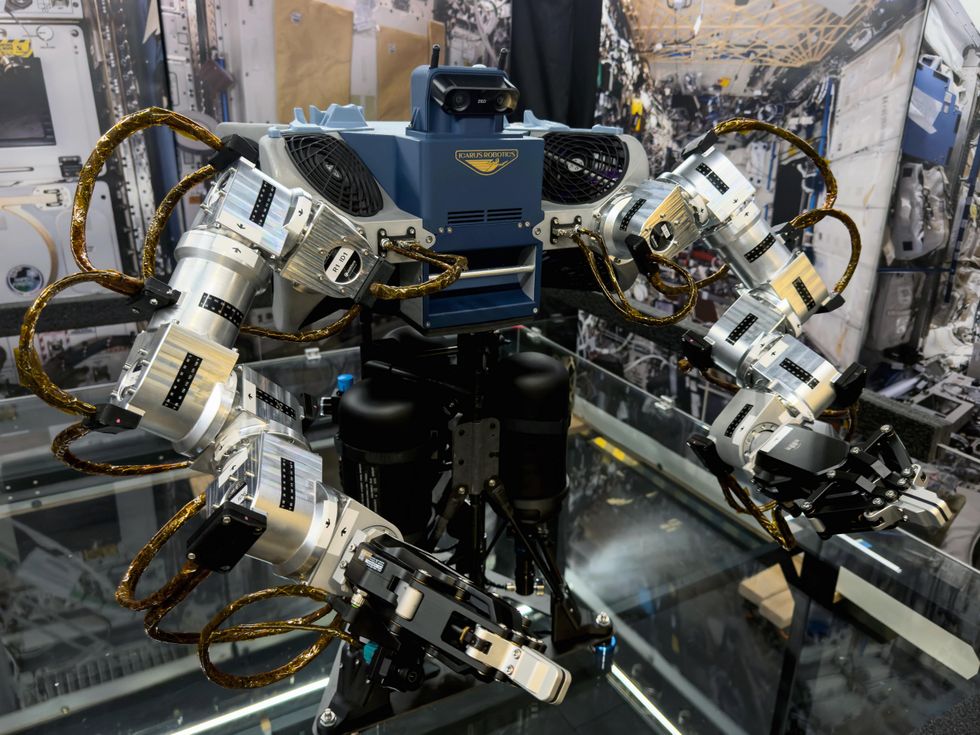
Space was always supposed to be the final frontier of human exploration. It’s shaping up to be the final frontier for artificial intelligence too. Last December, NASA’s Jet Propulsion Laboratory used Anthropic’s Claude models to help plan two Mars drives for the Perseverance rover , with human planners checking and adjusting the route before upload. In May, NASA and IBM put a compressed AI model on the International Space Station and a satellite to identify things like floods and clouds from orbit, the first model of its kind demonstrated in space. And in July, astronauts on the ISS tested a large language model to see if it could help with questions on maintenance procedures . These experiments point to a larger shift in space engineering. For decades, engineers on Earth determined what a machine in space would do, and the machine would do exactly that. Now, researchers are testing whether nondeterministic systems like generative AI can give spacecraft more flexibility to interpret their surroundings, plan tasks, and one day make decisions for themselves. The technology is still far from trustworthy enough to hand over control of a spacecraft, but engineers are starting to ask whe